


Why Is Armenian Cuisine Considered the “Cradle of Flavors” of the South Caucasus?
Armenian cuisine is considered one of the oldest and richest culinary traditions in the world. Over the centuries, it has been shaped by the natural environment of the Armenian Highlands, agricultural traditions, and a culture of hospitality. For this reason, Armenian cuisine is often called the “cradle of flavors” of the South Caucasus. Every dish tells a story of history, family, and national identity.
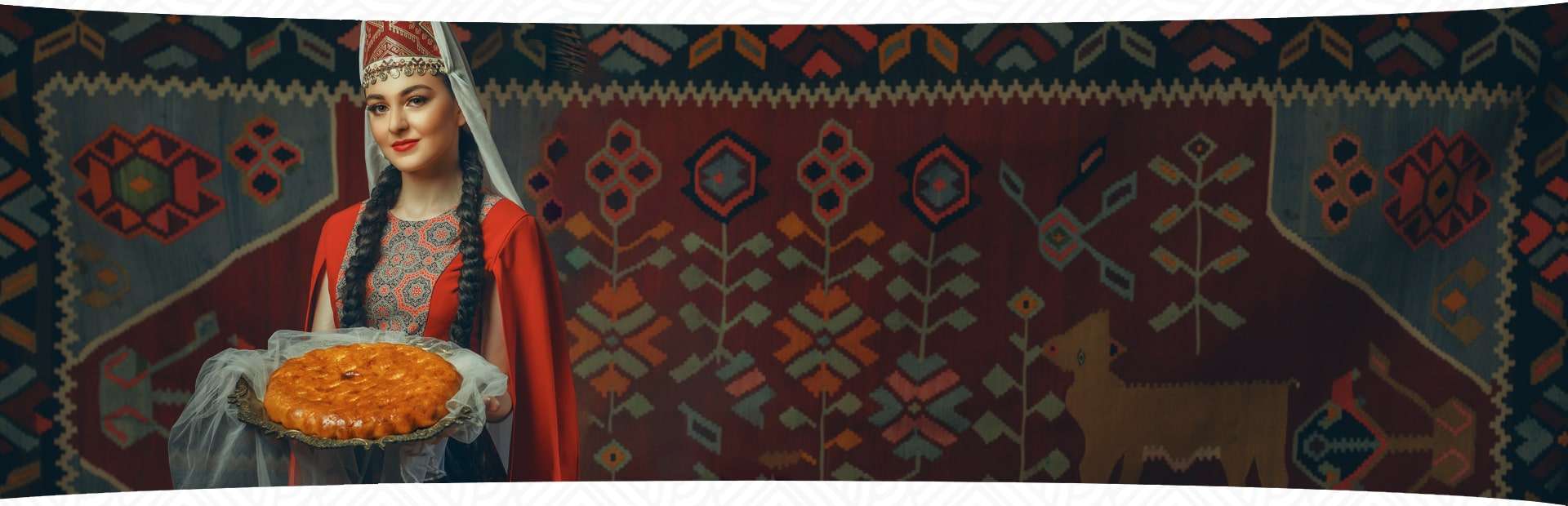
If you want to understand what makes Armenian cuisine unique, it is enough to sit around a traditional Armenian table just once. Natural ingredients, centuries-old recipes, bread baked in a traditional tonir (clay oven), and culinary secrets passed down from generation to generation create a distinctive world of flavors that is difficult to confuse with any other cuisine.
Traditional Dishes That Have Preserved the Taste of Centuries
One of the defining characteristics of Armenian cuisine is its historical continuity. Many dishes are still prepared using the same methods that were practiced hundreds of years ago. Even today, Armenian families continue to serve dishes that once graced the tables of their ancestors.
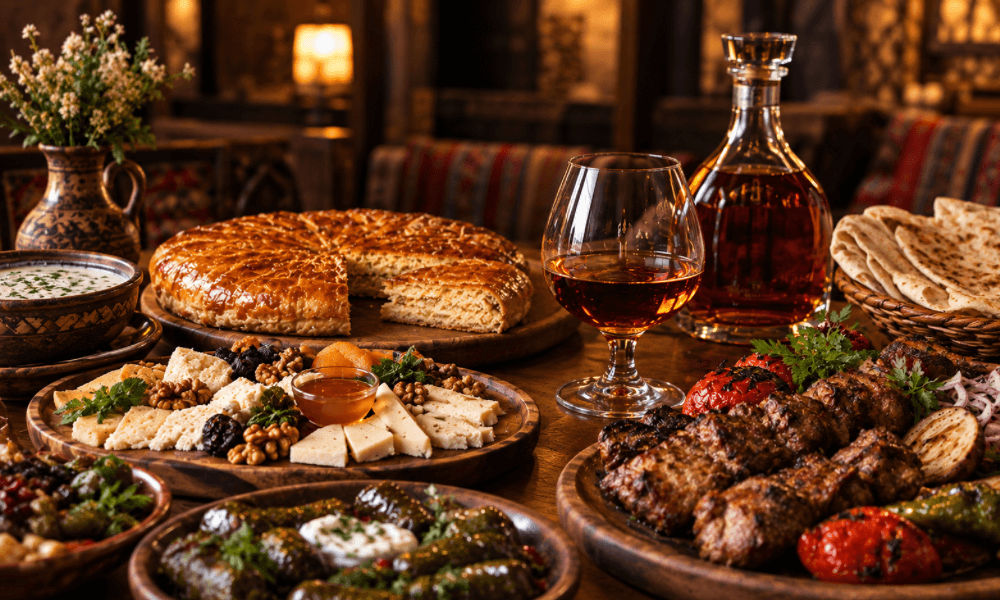
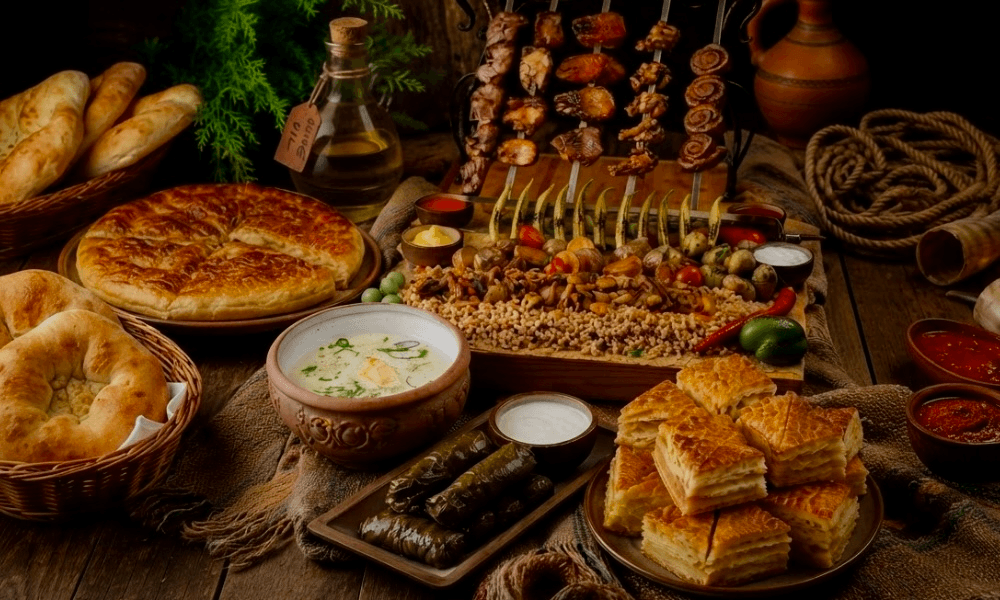
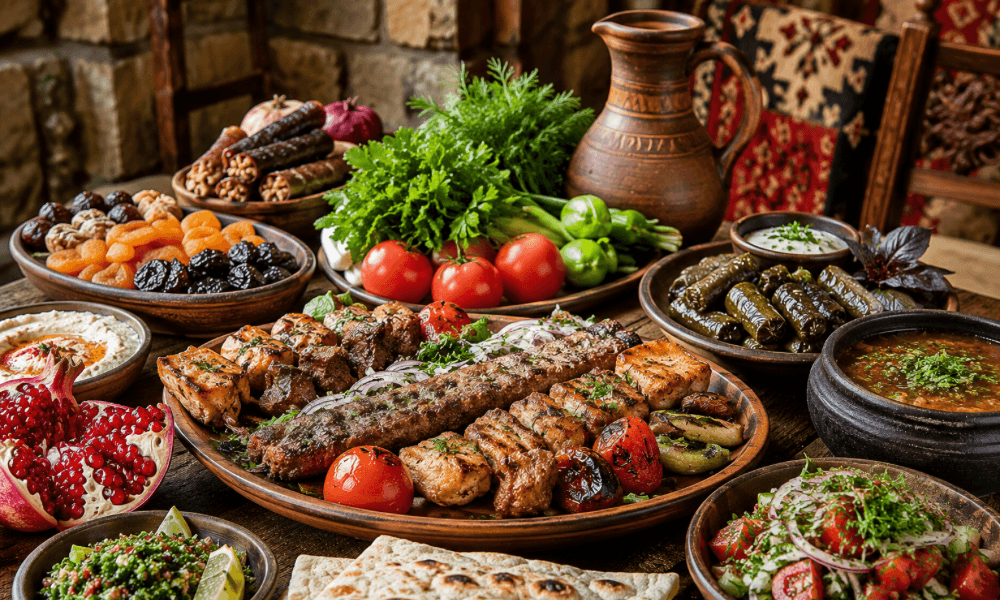
Khorovats (Armenian barbecue) is one of the signature dishes of Armenian cuisine. Meat grilled over natural charcoal, combined with carefully selected spices and fresh vegetables, creates the flavor that has become a symbol of Armenian hospitality.
Dolma also holds a special place in Armenian cuisine. Whether wrapped in grape leaves, cabbage, or prepared with stuffed vegetables, its many varieties demonstrate how diverse a single dish can be. Every family has its own recipe, making Armenian cuisine even more fascinating.
It is impossible not to mention Harisa, Khash, Kyufta, Spas, and Jingyalov Hats. These dishes are not merely food—they are an essential part of Armenian culture, festive celebrations, and family traditions.
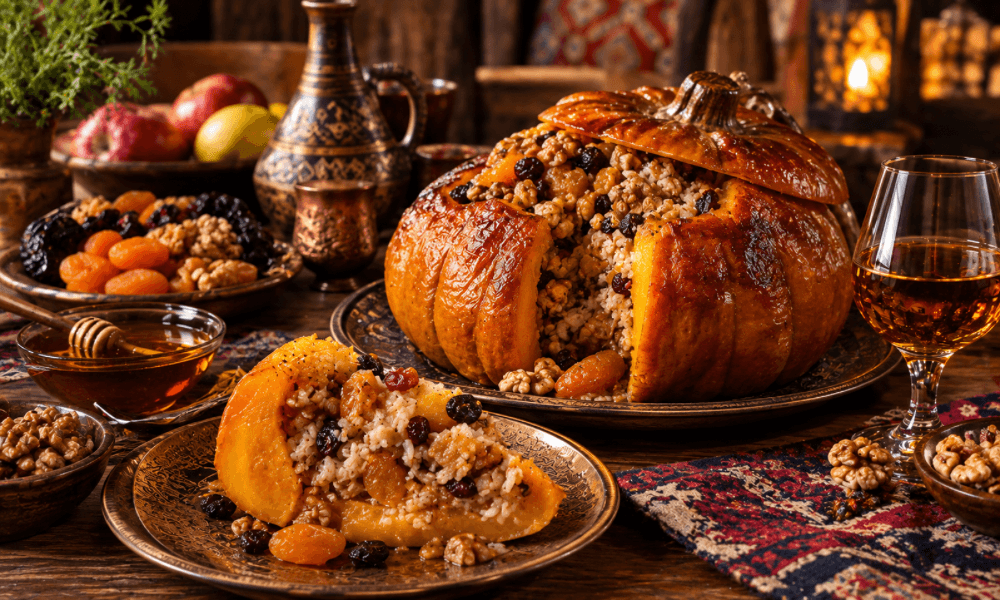
Lavash, traditional cheeses, fresh herbs, dried fruits, and Gata also play an important role in Armenian cuisine, completing the image of the Armenian table. It is this remarkable diversity that makes Armenian cuisine one of the richest culinary traditions in the region.
What Makes Armenian Cuisine Different?
Many people wonder what distinguishes Armenian cuisine from those of neighboring countries. First and foremost, it is the extensive use of natural, locally sourced ingredients. The climate of the Armenian Highlands provides ideal conditions for growing high-quality fruits, vegetables, grapes, and aromatic herbs, all of which find their way directly to the Armenian table.
Cooking methods are equally important. Many dishes are slow-cooked or prepared over an open fire, allowing them to develop rich and authentic flavors. The traditional tonir also plays a central role in Armenian cuisine, where Lavash, Gata, and many other traditional dishes are baked.
Special attention is also given to herbs and spices. Thyme, basil, citron, sumac, and other aromatic herbs do not overpower the food but instead enhance the natural flavors of meat, vegetables, and other ingredients.
Another defining feature of Armenian cuisine is its hospitality. Armenian tables are always filled with a variety of dishes because welcoming guests is considered a great honor. It is common to see appetizers, salads, hot dishes, fresh fruit, wine, and traditional desserts served together.
Armenian Cuisine: Culture, History, and Memorable Flavors
Armenian cuisine has long transcended national borders. Today, Armenian restaurants around the world introduce traditional Armenian dishes to thousands of people. Visitors to Armenia often say that Armenian cuisine becomes one of the most memorable parts of their journey.
The uniqueness of Armenian cuisine lies not only in the variety of its dishes but also in the history, traditions, family values, and sense of community it represents. Every festive table, family dinner, or gathering of friends becomes a warm occasion where food serves as a bridge for conversation and lasting memories.
Modern Armenian restaurants preserve national traditions while presenting them in innovative ways. In doing so, Armenian cuisine continues to evolve while maintaining its authenticity and centuries-old heritage.
It is no coincidence that Armenian cuisine is often referred to as the “cradle of flavors” of the South Caucasus. Its rich history, diverse traditional dishes, natural ingredients, and distinctive cooking techniques have created a culinary culture that is recognized and appreciated around the world.
If you want to discover the true spirit of Armenia, start with the Armenian table. Every dish tells a story, and every flavor reminds you why Armenian cuisine is considered one of the richest and most beloved culinary traditions in the region.