



Famous Fruits of Armenia: Discover Traditional Flavors at Gata Tavern
Armenia has long been renowned for its sun-ripened, aromatic fruits. Its fertile soil, sunny climate, and fresh mountain air create ideal conditions for growing fruits that are loved not only in Armenia but also recognized around the world. Fruits play an important role in Armenian cuisine, serving as key ingredients in desserts, main dishes, beverages, and traditional sweets.
If you want to discover the authentic taste of Armenian fruits, Gata Tavern is the perfect place to experience the traditions of Armenian cuisine. Here, you can enjoy the flavors and aromas that have been an essential part of the Armenian table for centuries.
Apricot – Armenia’s Golden Symbol
When speaking about Armenian fruits, it is impossible not to mention the apricot. It is one of the most important symbols of Armenian culture, art, and cuisine.
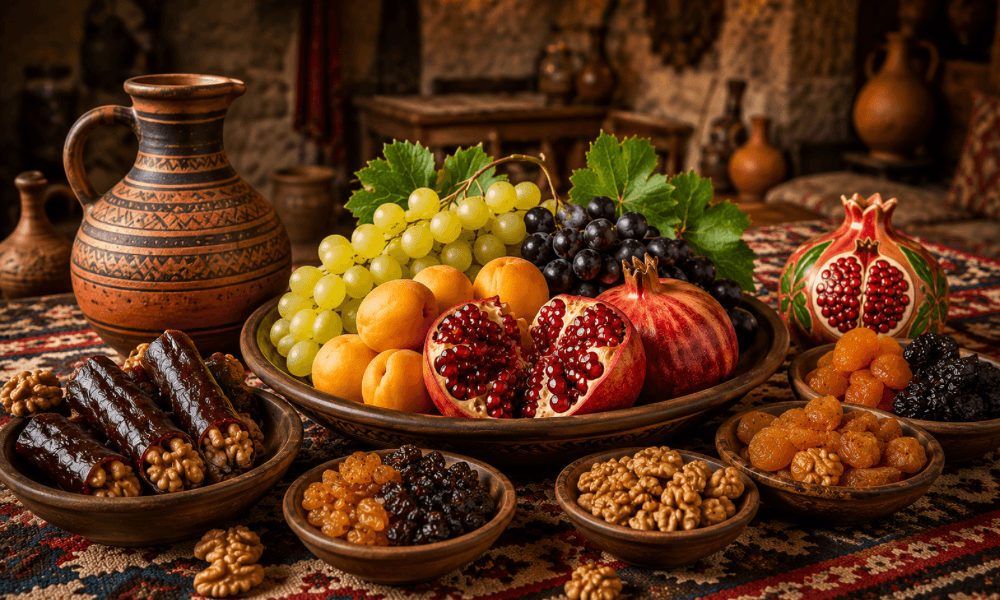
During the summer, Armenian markets are filled with various varieties of fresh apricots. They are known for their juiciness, sweetness, and rich aroma. However, apricots are enjoyed not only fresh. In Armenian cuisine, they are commonly made into jams, compotes, dried fruit, and the famous Alani (dried apricots stuffed with walnuts).
Dried apricots are considered not only delicious but also highly nutritious. They are rich in vitamins, antioxidants, and essential minerals. For this reason, many visitors choose dried apricots as a traditional souvenir to take home from Armenia.
At Gata Tavern, traditional Armenian desserts and fruit-based dishes allow guests to experience the natural taste and aroma of apricots, instantly evoking the warmth of an Armenian summer.
Pomegranate – A Symbol of Prosperity and Armenian Heritage
The pomegranate holds a special place in Armenian culture. It symbolizes fertility, family prosperity, abundance, and good fortune. This is why pomegranate motifs are frequently found in Armenian art, carpet weaving, and even architectural ornamentation.
Armenian pomegranates are famous for their juicy seeds, vibrant color, and perfectly balanced sweet-and-tart flavor. They are widely used in Armenian cuisine for preparing salads, sauces, meat dishes, and desserts.
Pomegranate juice is also one of Armenia’s most popular natural beverages, enjoyed by both locals and visitors. In addition, pomegranate seeds are often used as a garnish, adding both beauty and a distinctive flavor to many dishes.
In Armenian cuisine, pomegranates are often paired with walnuts, meat, and fresh herbs, creating traditional yet uniquely flavorful combinations.
Grapes – The Foundation of Millennia-Old Winemaking
Armenia is considered one of the world’s oldest winemaking regions, and grapes have always been at the heart of this rich history. The traditions of grape cultivation in the Armenian Highlands date back thousands of years, and today Armenian grape varieties continue to be celebrated for their exceptional quality and diversity.
Fresh grapes are an essential part of the Armenian table, especially during autumn. White, pink, and dark varieties each offer their own distinctive flavors, while all are known for their rich aroma and natural sweetness.
Grapes are used not only for producing wine but also for making raisins, grape molasses (doshab), juices, and traditional Armenian sweets. One of the best-known delicacies is Sweet Sujukh, prepared with grape juice and walnuts.
At Gata Tavern, many traditional Armenian dishes and desserts reflect these rich winemaking and fruit-growing traditions. Here, the taste of Armenian grapes and the country’s legendary hospitality come together around one table.
The Taste of Armenian Fruits at the Heart of Armenian Cuisine
Apricots, pomegranates, and grapes are much more than fruits—they are an essential part of Armenia’s culture, history, and culinary heritage. For centuries, these fruits have nourished Armenian families, decorated festive tables, and become enduring symbols of national identity.
At Gata Tavern, lovers of Armenian cuisine can discover these authentic flavors while enjoying traditional dishes, warm hospitality, and fruit-inspired desserts. Every flavor tells the story of Armenia, and every dish reflects the richness of its culinary traditions.
If you want to truly experience Armenian cuisine, begin with its remarkable fruits. The sun-kissed sweetness of apricots, the refreshing flavor of pomegranates, and the rich taste of grapes beautifully represent Armenia’s nature and culture. These fruits are not only delicious but also carry centuries of history, continuing to grace Armenian tables and delight visitors from around the world.