



Vegetarian Armenia: Delicious Plant-Based Dishes at Gata Pandok
Armenian cuisine is often associated with abundant meat-filled tables. However, in reality, it has deeply rooted plant-based traditions. Over the centuries, everyday life, fasting customs, and the natural richness of the Armenian Highlands have created a diverse and abundant world of vegetarian dishes. Today, as healthy eating and plant-based lifestyles become global trends, Armenian cuisine is being rediscovered as natural, balanced, and rich in flavor.
At Gata Pandok, vegetarian dishes are presented not as limited alternatives, but as a complete gastronomic direction. Each plant-based dish is created on the foundation of Armenian tradition, preserving natural flavors and emphasizing ingredient quality. The result is a menu that combines healthy food, aesthetic presentation, and warm Armenian hospitality.
Armenian Cuisine: Plant-Based Roots and Centuries-Old Traditions
The development of vegetarian dishes in Armenian cuisine has largely been shaped by fasting traditions. Throughout the year, there were numerous fasting days during which animal products were excluded from the diet. This encouraged the creation of new recipes based on legumes, vegetables, herbs, and wild plants.
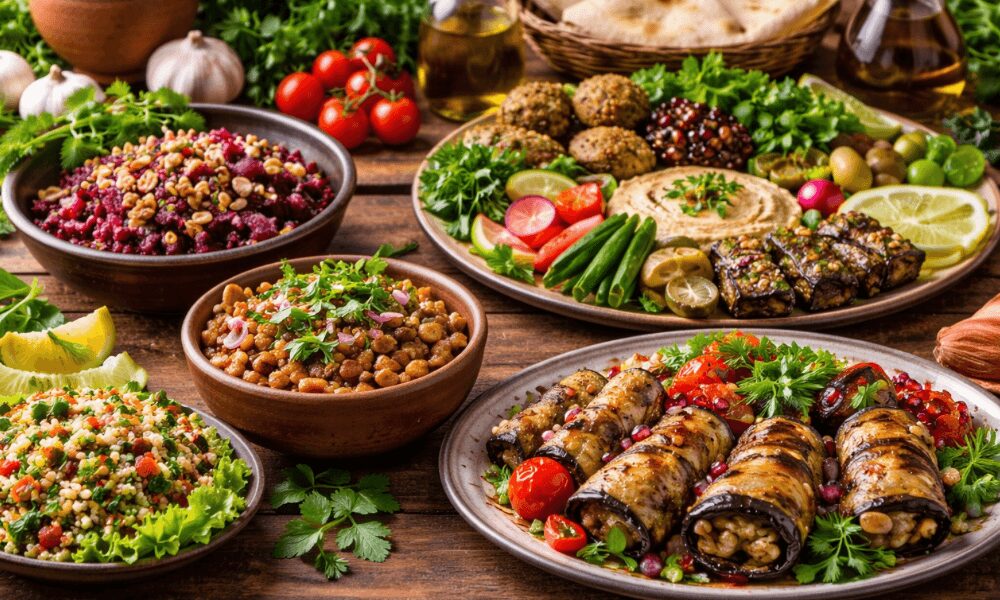
Beans, lentils, chickpeas, and buckwheat became primary sources of protein. They are used to prepare soups, stews, and salads that are both filling and nutritious. For example, lentil soup is considered a classic Armenian vegetarian dish, seasoned with onion, garlic, and Armenian herbs to create a rich aroma and deep flavor.
Eggplant also holds a special place in Armenian cuisine. It can be found baked in the tonir (traditional clay oven) or prepared as a cold appetizer with walnuts and garlic. Beetroot, wild greens, green beans, and various mountain herbs have also been widely used to create healthy and flavorful dishes.
All this shows that vegetarian dishes have never been secondary in Armenian cuisine. They developed naturally and became part of the national identity.
Vegetarian Dishes at Gata Pandok: A New Breath of Tradition
At Gata Pandok, vegetarian dishes are prepared with seasonal and fresh ingredients, preserving the character of Armenian cuisine. Guests can enjoy colorful salads made with beetroot, walnuts, fresh herbs, and seasonal vegetables. These combinations are not only healthy but visually appealing.
Among hot vegetarian dishes, stewed beans and lentils stand out, often served with fresh lavash. Dishes prepared with eggplant and tomatoes are seasoned with Armenian herbs, offering rich aromas and natural depth of flavor.
In addition to classic recipes, modern interpretations are also presented while maintaining Armenian culinary foundations. Presentation plays an important role: vegetarian dishes are served in a way that makes the table vibrant and diverse. This proves that plant-based food can be not only healthy but also a high-level gastronomic experience.
Even those accustomed to meat-based dishes often discover the richness and diversity of vegetarian flavors. At Gata Pandok, plant-based dishes are crafted so every guest can experience the completeness of Armenian cuisine.
Healthy Living and the Future of Armenian Cuisine
In today’s world, more and more people choose plant-based food for health, lightness, and environmental reasons. Armenian cuisine has a natural advantage in this regard, as it is rooted in local and natural ingredients.
Vegetarian dishes are rich in fiber, vitamins, and minerals. They support digestion and provide long-lasting satiety. When combined with Armenian herbs and traditional cooking methods, they create a balanced and flavor-rich menu.
Plant-based cuisine also allows a renewed appreciation of natural flavors. When vegetables are properly prepared — in a tonir, stewed, or lightly sautéed — they retain their natural sweetness and juiciness. The moderate use of spices in Armenian cuisine further preserves this natural balance.
At Gata Pandok, vegetarian dishes are presented as a choice aligned with modern life while preserving national traditions. This is yet another proof that Armenian cuisine is flexible, diverse, and in harmony with global trends.