



Ghapama: Pumpkin Stuffed with Apples and Raisins on the Armenian Festive Table
Armenian cuisine is known not only for its meat dishes, barbecue, kebab, and variety of pastries, but also for unique dishes whose appearance alone creates a festive atmosphere. One such dish is ghapama — a traditional Armenian dish prepared inside a whole pumpkin, particularly associated with festive and family gatherings.
Ghapama is interesting because it combines sweet, fruity, and nutty flavors. The natural sweetness of pumpkin is complemented by raisins, dried fruits, and walnuts, while different recipes may also include apples, honey, rice, or other ingredients. The result is an unusual pumpkin-based dish that can be served as a centerpiece of a festive table or as a unique dessert-style dish.
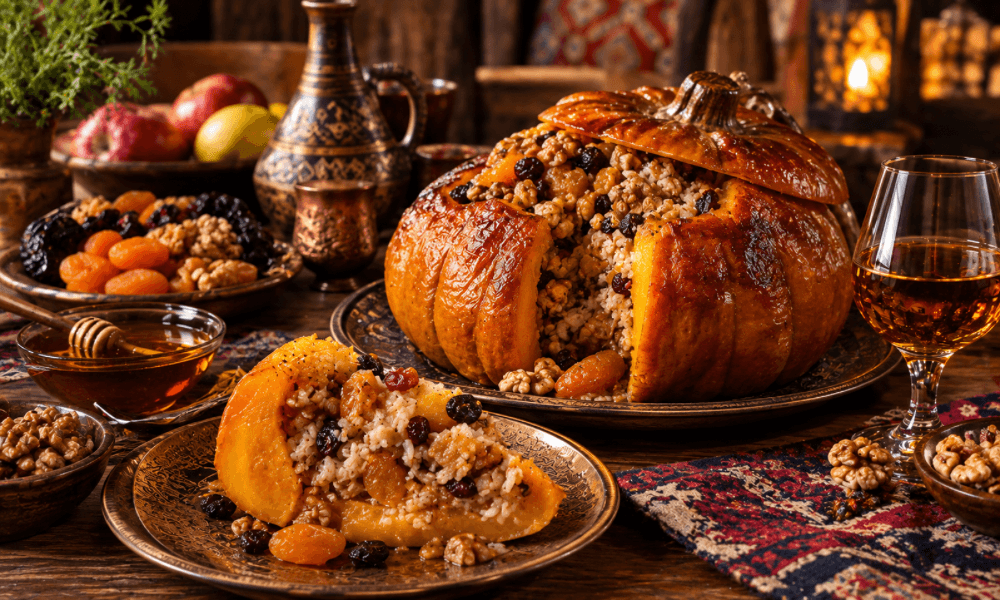
Ghapama is especially beautiful when served. The whole baked pumpkin is placed on the table in its natural form, then opened and divided among the guests. The colorful filling visible inside — raisins, fruit, walnuts, and other ingredients — gives the dish a festive and appealing appearance.
What Is Ghapama and Where Did It Originate?
Ghapama is one of the traditional dishes of Armenian cuisine, with its name and preparation method associated with the use of pumpkin. It is prepared inside a whole pumpkin by removing part of the flesh and creating a natural “vessel” into which the selected filling is placed.
This method distinguishes ghapama from many other pumpkin dishes. Here, the pumpkin is not simply an ingredient; it simultaneously serves as the main part of the dish and as its serving vessel.
Ghapama is particularly interesting on the Armenian festive table because it combines simple rural ingredients with festive presentation. Pumpkin, raisins, walnuts, fruit, and honey have traditionally been accessible ingredients, yet their careful combination creates a rich and aromatic dish.
Ghapama as a Symbol of the Festive Table
At a festive table, the appearance of a dish is often just as important as its taste. Ghapama stands out in this respect. Serving it as a whole pumpkin creates a central and eye-catching dish on the table.
Especially during family gatherings, such a dish can become a reason for everyone to gather around the table. Opening the pumpkin, dividing it, and serving portions to each guest can also become part of the festive experience.
Ghapama is often associated with the autumn and winter seasons, when pumpkin naturally becomes an important seasonal ingredient. At the same time, its sweet and dried-fruit flavors fit well with the atmosphere of New Year celebrations and other family holidays.
Ghapama Ingredients and Traditional Preparation
The ingredients of ghapama may vary depending on the family, cook, or region. However, the main idea remains the same: a whole pumpkin, a sweet or semi-sweet filling inside, and slow baking.
Traditional versions may include rice, raisins, dried fruit, walnuts, and honey. Modern presentations often also include apples or other fruits, which add freshness and a more pronounced fruity aroma to the filling.
Ghapama at Gata Tavern — Our Version
When presenting traditional Armenian dishes in a modern tavern setting, it is important to preserve their essential character while also paying attention to presentation and balance of flavors.
Ghapama is one of the dishes that allows the traditional concept to be preserved while creating a modern presentation. The pumpkin can remain whole, while the filling can consist of ingredients that highlight the sweet, fruity, and nutty flavors characteristic of Armenian cuisine.
At a place such as Gata Tavern, which presents Armenian cuisine, ghapama can be particularly interesting for guests who want to discover not only the most famous meat dishes but also the less familiar sides of traditional Armenian cuisine.
Ghapama and the Armenian Festive Table
For the Armenian festive table, not only the variety of dishes but also their history and symbolic significance are important.
Ghapama is particularly suitable for a festive setting in this respect. It is large, visually striking, and designed to be shared. A family or group of friends can enjoy the same whole dish together.
This idea fits well with the Armenian table tradition, where food often becomes a central element that brings people together.
Pairing Ghapama with Other Armenian Dishes
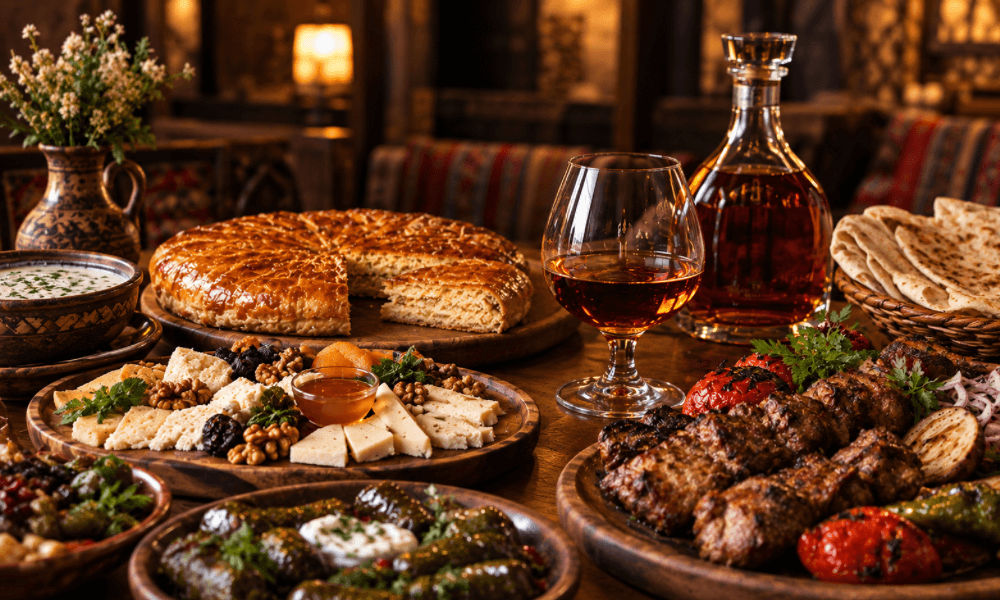
If ghapama is served as part of a large Armenian feast, it can follow saltier or more substantial dishes. For example, after barbecue or kebab, ghapama can create a change of flavor, transitioning toward sweeter and fruitier notes.
Light salads and fresh fruit can also complement the overall table. When choosing a beverage, it is worth considering the sweetness of ghapama and selecting a drink that will not overpower its flavor.
Hot tea or Armenian coffee can also be natural companions to ghapama, especially when the dish is served at the end of lunch or dinner.
Ghapama as an Interesting Ambassador of Armenian Cuisine
For tourists interested in discovering Armenian cuisine, ghapama is an interesting choice precisely because of its uniqueness.
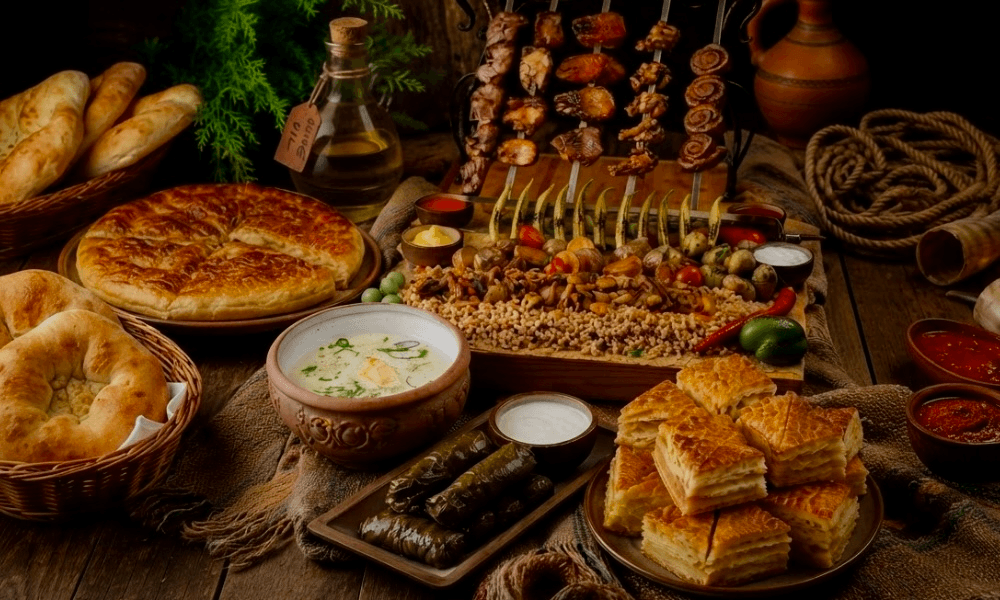
Barbecue, dolma, and gata are already widely recognized in the context of Armenian cuisine, while ghapama demonstrates just how diverse traditional Armenian food can be.
It showcases an interesting way of using pumpkin and combines a number of ingredients characteristic of the Armenian table — dried fruits, walnuts, fruit, and natural sweeteners.
For a tourist, a dish prepared inside a whole pumpkin is also a visual experience. It can easily become one of the memorable dishes of a trip.
Frequently Asked Questions
Is ghapama a dessert or a main dish?
Ghapama falls somewhere between these two categories. It is prepared with pumpkin and can have a fairly sweet filling, but on a traditional table it may be served as a separate festive dish. The combination of pumpkin, rice, fruit, dried fruit, and walnuts allows it to be viewed as a unique sweet dish.
What does ghapama pair best with?
Ghapama can be enjoyed on its own, as it already contains a variety of flavors and ingredients. It can pair well with hot tea, coffee, or another beverage that is not overly sweet. If it is served as part of a large feast, it can also be enjoyed after light salads or main dishes.
Can ghapama be ordered at Gata Tavern all year round?
The availability of ghapama may depend on the current menu and seasonal offerings. Since pumpkin and some of the ingredients may be seasonal, it is advisable to check availability for the specific day or period before visiting.
Is ghapama only for New Year celebrations?
No. Although ghapama is often associated with the Armenian festive and New Year table, it can also be prepared for other family occasions, autumn gatherings, and special events.
Can apples be used in ghapama?
Yes. Apples can complement the ghapama filling by adding a light fruity aroma and a touch of acidity. They are particularly interesting when combined with raisins, walnuts, and the natural sweetness of pumpkin.
Why are walnuts used in ghapama?
Walnuts add depth of flavor and create a textural contrast. Alongside the soft pumpkin and rice, the firmer texture of walnuts makes the dish more interesting.